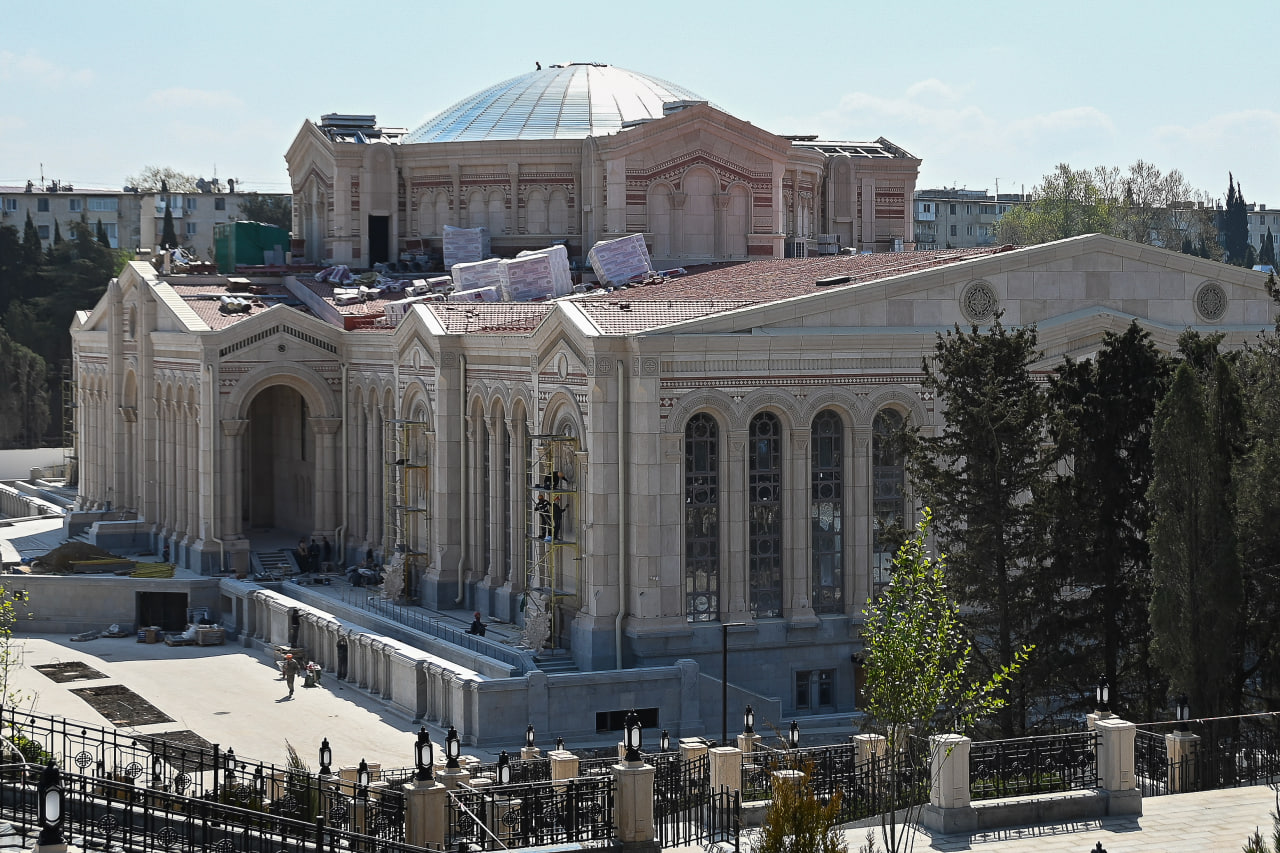
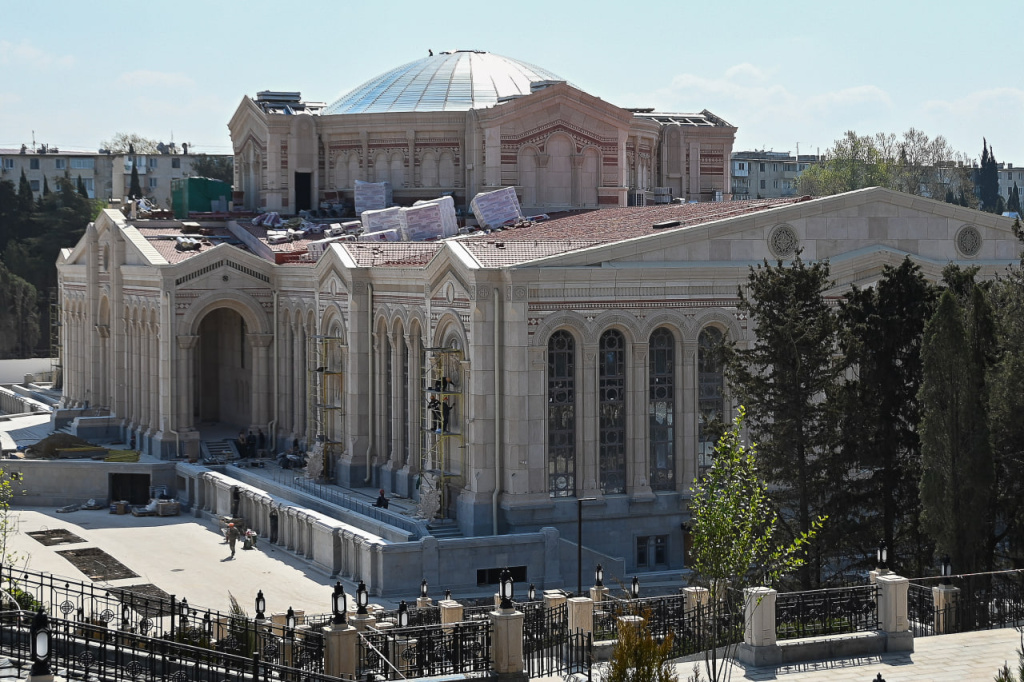
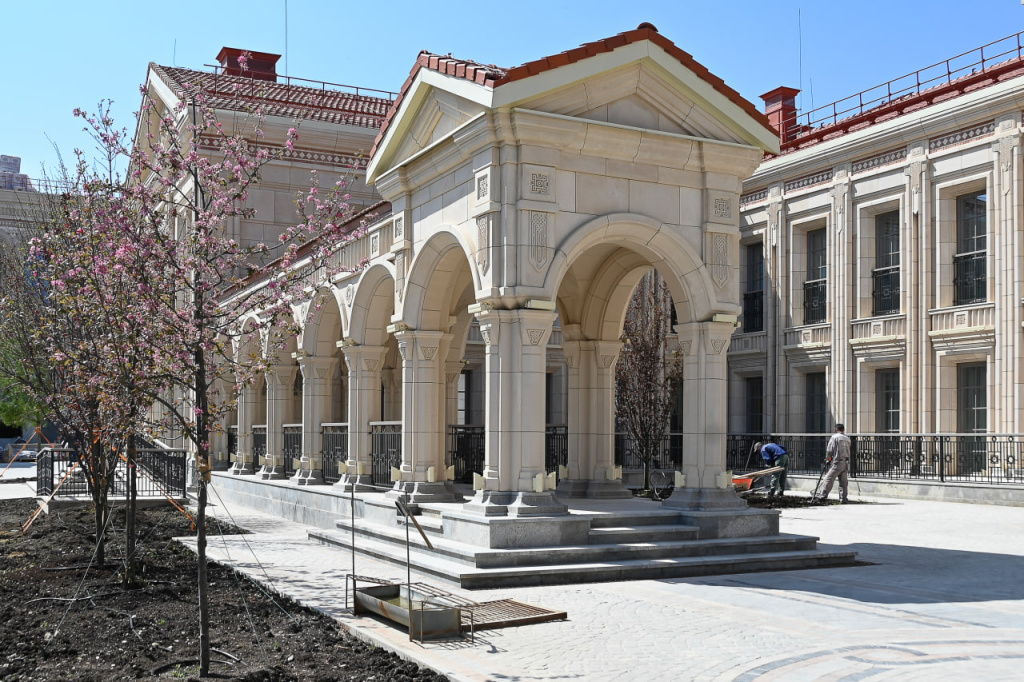
Specialists from the Defence Ministry’s military construction sector are building over 10 structures on the territory of the Tauric Chersonesus historical and archaeological park. These include youth centres, museums dedicated to Crimea, Christianity, antiquity and Byzantium, an amphitheatre, as well as premises for craft and pottery workshops. The Crimean Magazine has learned what this large cultural cluster will be like.
-
President Vladimir Putin regarded Chersonesus as an all-important venue of special memory and special sacral historical significance, said the author of the project, Chair of the Patriarchal Council on Culture, Metropolitan Tikhon (Shevkunov) of Simferopol and Crimea.
-
The park is 80 percent completed.
-
The Art School as a children’s artistic aesthetic centre and an Artek affiliate Korsun are already in operation.
Five million finds
Prior to construction, the Southern Suburb expedition conducted extensive excavation work in this area. They uncovered a total of 6 million artefacts spanning different historical periods, of which almost 600,000 have museum value.
In addition to artefacts associated with the Greek polis that existed during ancient, Roman, Byzantine and medieval periods, earlier findings dating back to the Bronze Age )10th-9th centuries BC) were discovered here.
One of the key structures being built is the first Museum of Christianity in Russia and the world. This museum will showcase the history of Chersonesus and the country from the time of the Baptism of Rus to the present day. A prominent feature of the museum will be a hall dedicated to Gospel events. There are plans to create digital replicas of pieces from the Tretyakov Gallery.
Bas-reliefs with the faces of saints are being installed on the future museum’s building. These monumental details were crafted by renowned sculptor Vitaly Shanov, known for his creation of the sculpture of Alexander Nevsky with his retinue in the Pskov Region. Each square metre of bas-relief weighs up to 100 kilogrammes.
-
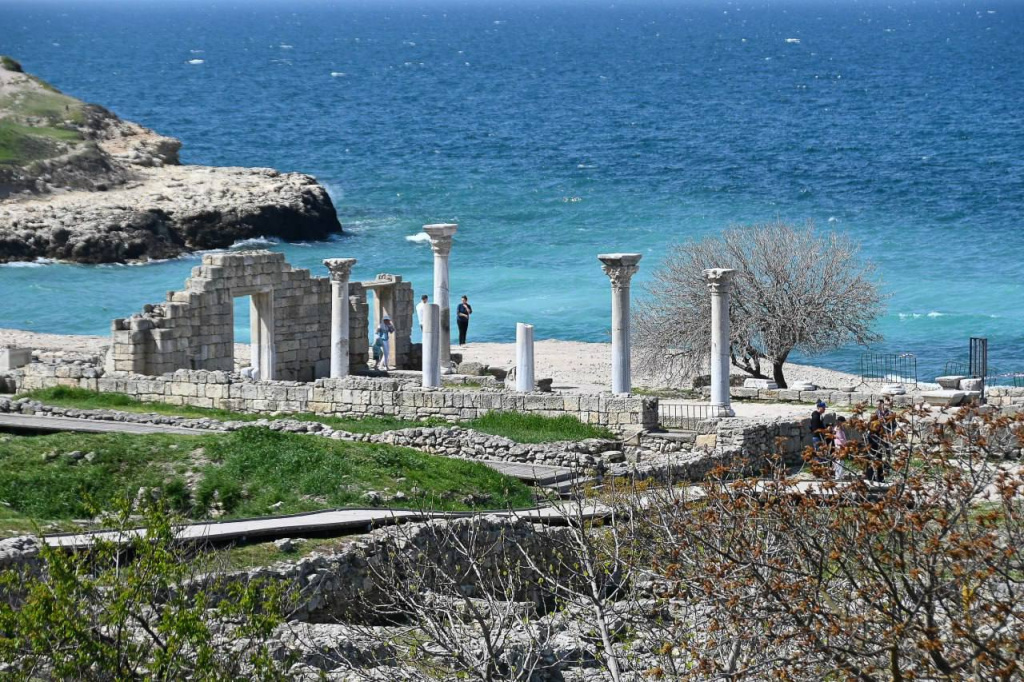
Chersonesus was founded in 424-421 BC as a Greek colony.
-
It represented a typical Hellenistic polis-fortress and chora (agricultural district). The entire Heracles Peninsula (the territory of modern Sevastopol) was divided into equal plots that belonged to local residents. Several allotments were controlled by one chora manor. The ruins of these manors are still partially preserved.
-
In the Chersonesus district, the main agricultural products cultivated were grapes and cereals. The remnants of vine walls used for cultivation can still be clearly observed on the Heracles Peninsula. The area of Chersonesus, combined with chora, exceeds that of the residential neighbourhoods in today’s Sevastopol.
-
Tauric Chersonesus is the only antique polis on the Northern Black Sea Coast that remained active until the end of the 14th century.
“Polite people” on the façade
Russia’s first museum of Crimea and Novorossiya is another landmark in the New Chersonesus Park.
This unique project aims to bring innovative cultural and educational experience to the peninsula. The museum features multimedia equipment, classic artefacts, immersive halls offering virtual journeys into the past, a 5D cinema, and a large-scale infrastructure, including the building itself. In addition to eight exhibition halls, the centre will have viewing platforms, fountains, and green zones, ensuring accessibility for people with limited mobility. This information was provided by the Press Service of the My History Foundation.
The façade of the Crimea and Novorossiya Museum is decorated with monumental bas-reliefs depicting scenes from Crimean history. It took ten sculptors from Vitaly Shanov’s workshop several years to complete them.
These bar-reliefs depict in detail the Baptism of Rus, the heroic defence of Sevastopol, events of the past decade and the development and prosperity of the peninsula. One particular bar relief on the façade shows the “polite people,” the Crimean Bridge, episodes from life in the new Russian regions and historical fragments of new Chersonesus.
According to one theory, Grand Prince Vladimir was baptised in Korsun, as Chersonesus was called at that time. This is why it was called the cradle of Orthodoxy.
Amphitheatre and the river
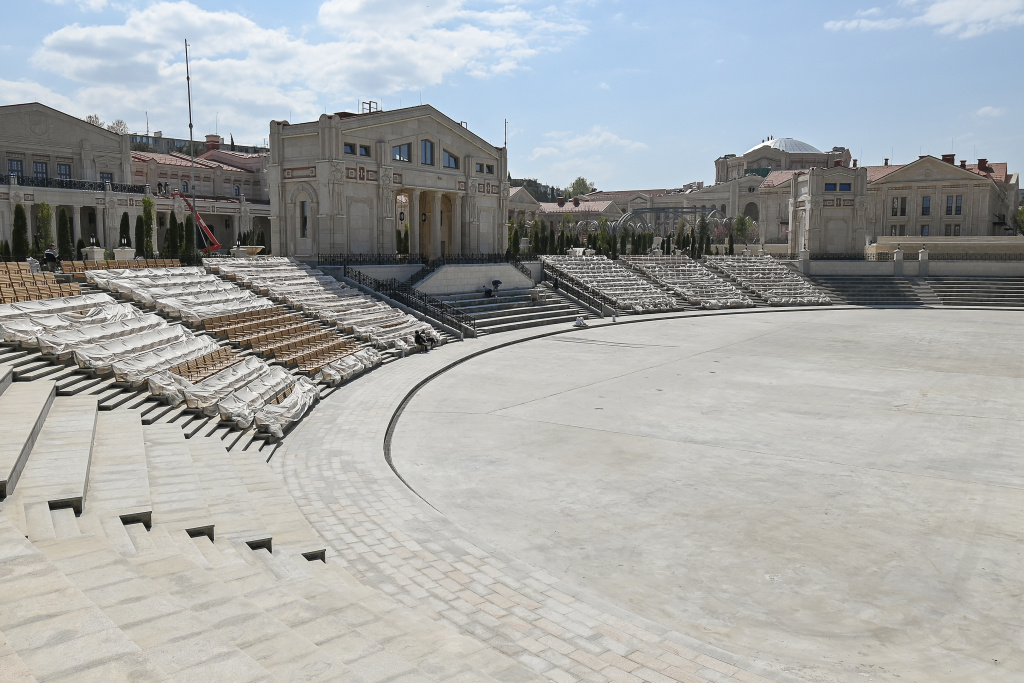
A new amphitheatre for 1,200 spectators will host modern shows and reenactments.
“The rotundas of the amphitheatre will be decorated with atmospheric architectural lighting, and the central part and the staircase will also be illuminated. Benches made of larch will be installed at the stands,” the Crimean Magazine was told in the My History Foundation.
Archaeologists discovered an underground riverbed in new Chersonesus, which has been brought to the surface. Researchers have reported finding a large burial at the excavation site by the river. Based on the nature of the findings, it has been identified it as a heroon.
Heroon is a shrine or grave of an important person, often a hero.
Scientists believe this is a burial of one of the first governors of Chersonesus. Metropolitan Tikhon suggested naming the river in honour of this sensational discovery. The artefacts found during the excavations, along with a plate from the burial, will be displayed in the new museum.
Currently, walkways are being built along the river, including a bridge, and plans are in place for water planting.
Patriarch of Moscow and All Russia Kirill said: “It is impossible to deny that by accepting Christianity, Rus took a step towards the truth. However, baptism does not mean that our ancestors entered some special, exclusive community of peoples. Christ has no chosen peoples – he loves and waits for everyone. He loves those peoples who accepted Christianity in apostolic times, those who were baptised during Prince Vladimir’s rule and those who learned the good news much later.
Garden City
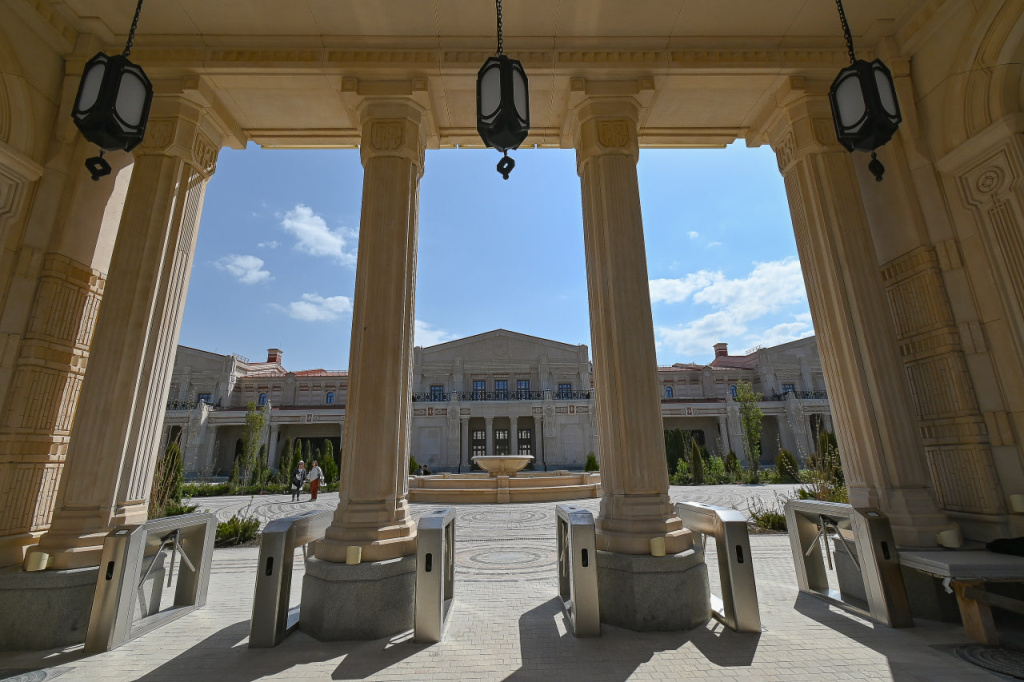
New Chersonesus will be home to 26,000 plants.
“During excavations, 50-year-old trees including Red Book Crimean pines were successfully replanted. The landscape was not only preserved but improved through meticulous work. The future park will feature a wide variety of plants, including several varieties of junipers, weeping willows, thuyas, cedars, cypresses, blue spruces, lilacs, maples, magnolias, dogwoods and barberry. Additionally, fruit trees will be planted, including apple, cherry and plum, to name a few. They were grown especially for this project in Tula, St Petersburg and Moscow,” the My History Foundation said.
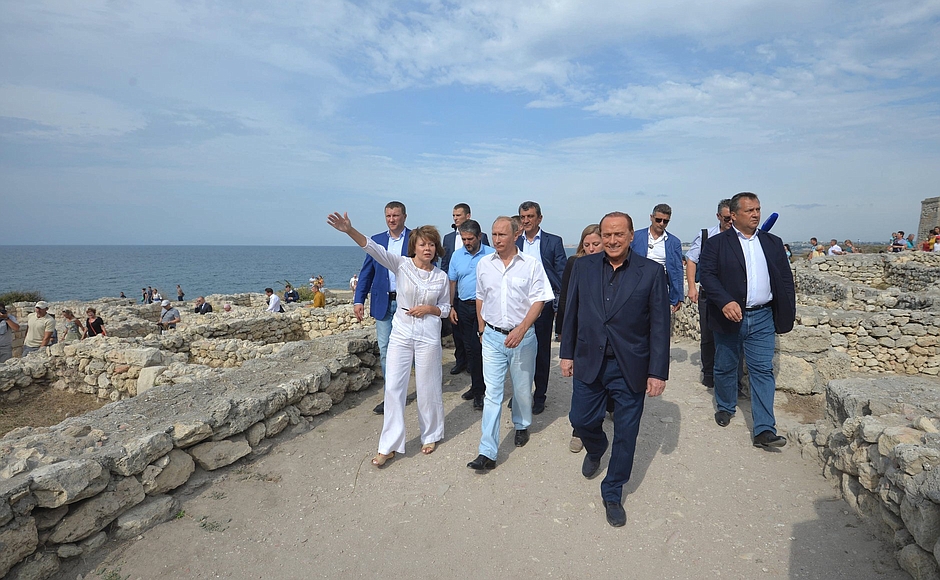
In 2015, President of Russia Vladimir Putin and former Prime Minister of Italy Silvio Berlusconi visited St Vladimir Cathedral in Chersonesus.
“This is one of the main sources of our spirituality. Indeed, Prince Vladimir not only baptised himself and his retinue in Chersonesus but also spiritually united and brought together all Slavic tribes living in this territory. In fact, this became the foundation for building a unified centralised Russian state. In this sense, this place is sacred and very important for the Russian state,” Vladimir Putin emphasised.