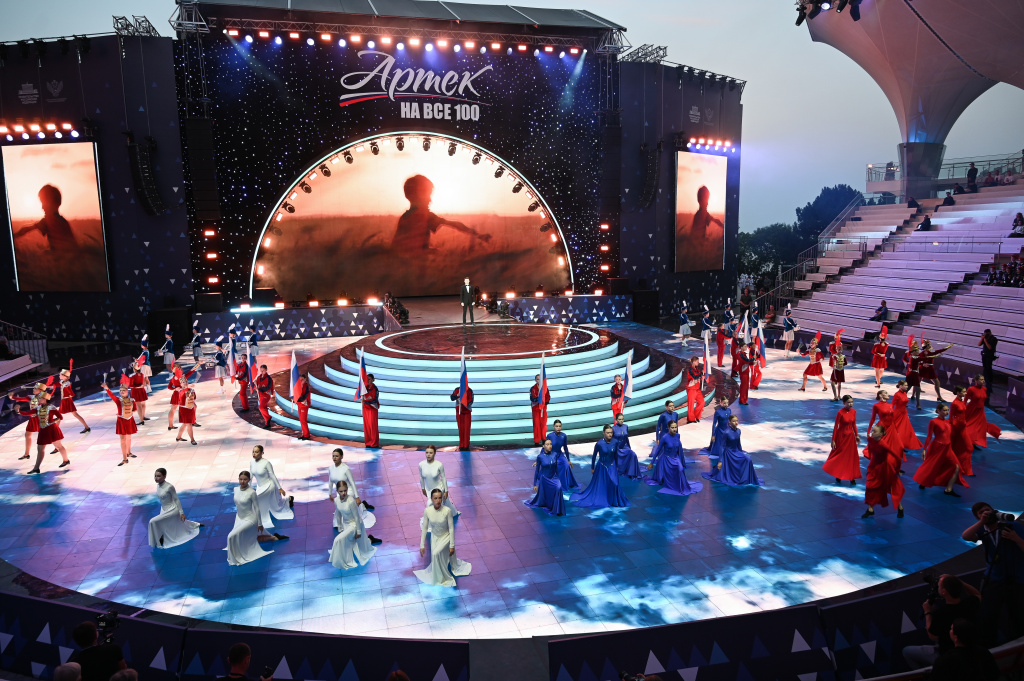
This year marks the 100th anniversary of Artek, the legendary International Children’s Centre in Crimea. To celebrate, we’re embarking on a journey through time to explore how the “Childhood Republic” has shaped generations.
Today, Artek is more than a camp; it’s a launchpad for the future – with digital workshops, space exploration exhibits, high-tech facilities, theatre productions and research expeditions.
Simple, yet good
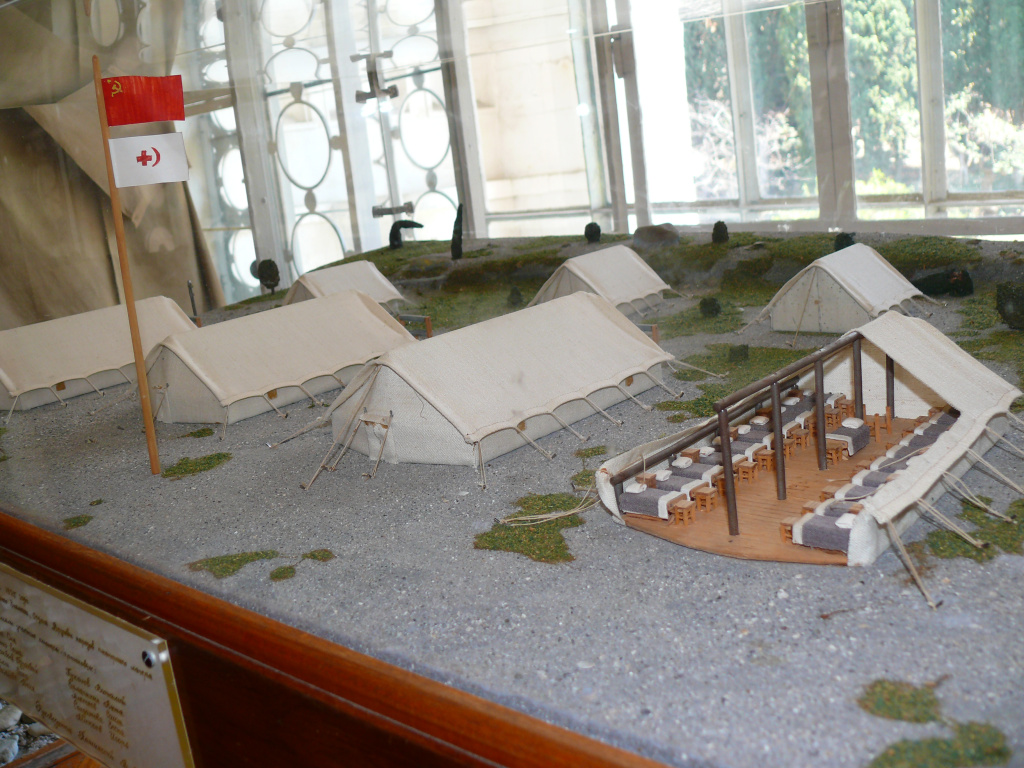
When Artek opened on June 16, 1925, with the Red Cross flag fluttering on the flagpole, its first 80 children – arriving fr om central Russia – were housed in large canvas tents, each filled with 20 wooden trestle beds. The pioneers slept on “mattresses stuffed with sea grass and a single feather pillow,” but their bedlinens were new: a pillowcase and two sheets, plus two blankets – one thick cotton, one wool – to keep them warm. Each child at the brand-new pioneer camp and health retreat received a set of linen underwear and a white wide-brimmed hat.
“The food is good”
The dining area was arranged not far fr om the tents, with a canopy stretched above wooden benches and tables covered with snow-white tablecloths. Everyone used a set of “an earthenware dish and a tea cup, a spoon, a knife, a fork and a napkin ring.” Although devastated by wars and crop failures, the country was able to provide those children with five meals a day, including homemade pastries, fresh vegetables and fruits. “The food is good,” a boy happily tells his parents. “The average weight gain is 2.4 kilos per month,” the head of the camp reports.
A traverse to Altai
When the Great Patriotic War broke out, all the pioneers were sent home – except for 200 children from already occupied western regions, who had nowhere to return. They had to be evacuated. Packing the Artek flag, the group was first relocated to the Moscow Region, then to Kazan, and finally across Siberia to Belokurikha, a remote village in Altai. For three years, the pioneers continued their studies while working to support soldiers on the frontlines. Only when the enemy was pushed back from Soviet borders did these now-grown children reunite with their families.
Partisans and Clementine
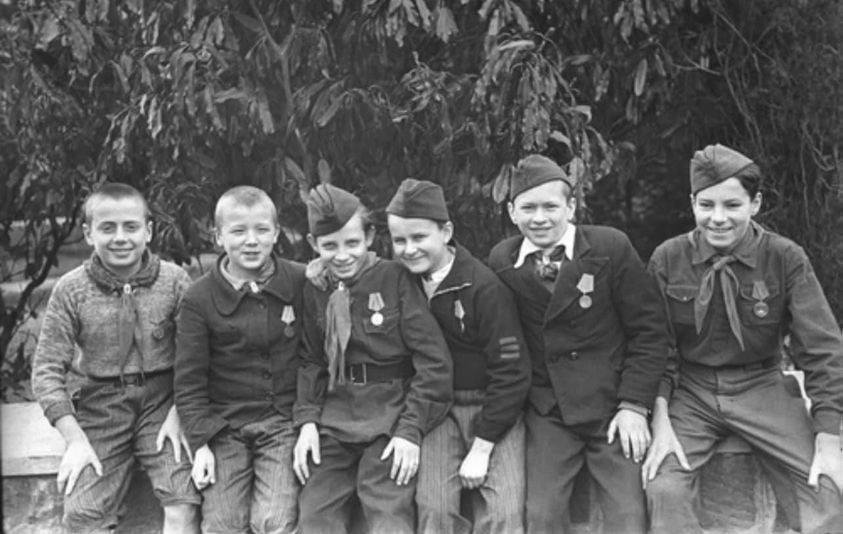
Artek’s revival began in the spring of 1944, as soon as Nazi forces were driven into the sea near Sevastopol. By August, the camp welcomed 300 children of Crimean partisans and young war participants for its first post-invasion session. The following spring, Clementine Churchill, the wife of the British Prime Minister, visited the camp bringing sturdy high-capacity tents from the British Red Cross Aid to Russia Fund, which she chaired – those shelters would serve as dormitories for a good 15 years.
Artek today
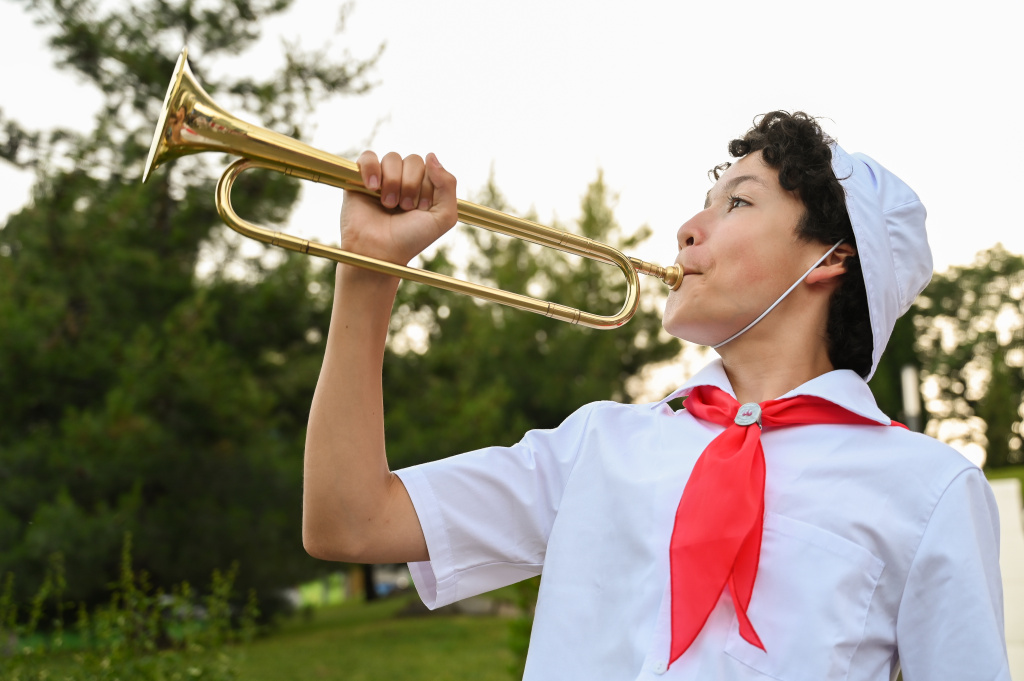
The legendary children’s camp has grown with truly cosmic ambitions. The present-day children’s centre incorporates 11 camps, complete with a school, a hospital, a film studio, and a yacht club – in addition to the space museum.
From 2014 to 2024, Artek hosted 346,749 children, with annual participation skyrocketing from just 6,000 in 2014 to nearly 45,000 in 2025, welcoming youth from across Russia and beyond.
An ambitious renovation project began in autumn 2014; by now, nine camps have been refurbished, including Kiparisny, Lazurny, Lesnoi, Morskoi, Ozerny, Polevoi, Rechnoi, Khrustalny and Yantarny. The 1,000-place Solnechny camp will reopen shortly, to become a platform for testing new teaching strategies. All buildings have been either overhauled or built from scratch, featuring spacious dormitories for 4-6 people, lounge areas, modern cafes, and sparkling swimming pools.
“Over the past 11 years, we’ve not just rebuilt it from ruins – we’ve become one of Russia’s foremost cultural and educational symbols,” Director Konstantin Fedorenko observed.
A beacon of innovation
Artek’s most striking transformation lies in its embrace of cutting-edge technology and science. The centre now features fully-equipped technology parks wh ere children explore robotics, 3D modelling, programming, and unmanned systems in a playful environment, under the guidance of passionate instructors. Through its AI and engineering labs, Artek has forged powerful partnerships with leading universities and tech corporations.
The camp has a professional-grade media studio wh ere young filmmakers master everything from video editing to podcast production under the mentorship of renowned journalists, actors, and directors. Artek’s theatre now stages ambitious productions ranging from world classics to avant-garde musicals.
Despite the sanctions, groups from the CIS countries, Asia, Latin America, and the Middle East continue to visit Artek. All programmes focus on intercultural communication, from language exchanges to country-focused events. Here, friendship is not a slogan, but a way of life.
Learning is light
Artek’s school is a source of special pride. The innovative programme offers flexible tracks in humanities or STEM fields enriched by guidance from working professionals and researchers. Cutting-edge classrooms feature the latest technology, while personalised mentoring ensures each student’s growth. The campus boasts exceptional lab facilities. In 2016, Artek introduced advanced physics and chemistry classrooms designed to meet the highest educational standards. These were soon complemented by new biology and robotics labs. In 2021, the school launched Crimea’s first nuclear studies classroom, featuring industry-grade equipment.
Beyond the classroom, Artek’s extracurricular centre provides 103 programmes spanning the arts and sports. Students can also choose between specialised thematic groups during their sessions at Artek. Options range from marine studies and medical training to tourism, environmental stewardship, visual media, theatre, DJs, and even the popular KVN comedy game.
Through the Roscosmos space agency’s Space One project, Artek children design rockets and satellites, study spacecraft systems, and meet cosmonauts like Dmitry Matveyev. The 2024 thematic session, First in Space, Best in the World, saw participants constructing functional mini-satellites and hydropneumatic models. For Artek’s centenary, the Artek 100% Space-π competition gave winners an extraordinary opportunity: their drawings were engraved on the HyperView-1G satellite made in Samara before its orbital launch.
The Artek.Eco initiative transforms students into active guardians of nature. Their expeditions, research, and marine ecosystem monitoring projects foster deep environmental consciousness.
For active and athletic teenagers, Artek offers seven dedicated sports and fitness programmes supported by outstanding facilities: nine sports grounds, three outdoor pools with waterslides, a climbing wall, a rope park and a major sports centre housing two indoor swimming pools, a gym, and tennis courts. The complex also features a central stadium – a 7,000-seat venue built to international competition standards.
The Artek campus further ensures student wellbeing with a cutting-edge medical centre staffed by highly qualified physicians.
ARTEK IN NUMBERS
-
218 hectares total area
-
102 hectares of parkland
-
33 facilities built or upgraded during the 2014–2025 renovation (including camps, academic buildings, a technology park and the Solnechny school)
-
2025 milestones:
Opening of Solnechny camp
New 1,200-seat Centre for Innovative Educational Technologies featuring a multipurpose auditorium, an amphitheatre, and workshop spaces -
Summer 2024: Artek hosted over 12,000 children, including 1,000 international participants from 68 countries
Text: Ivan Kovalenko, Diana Maslova