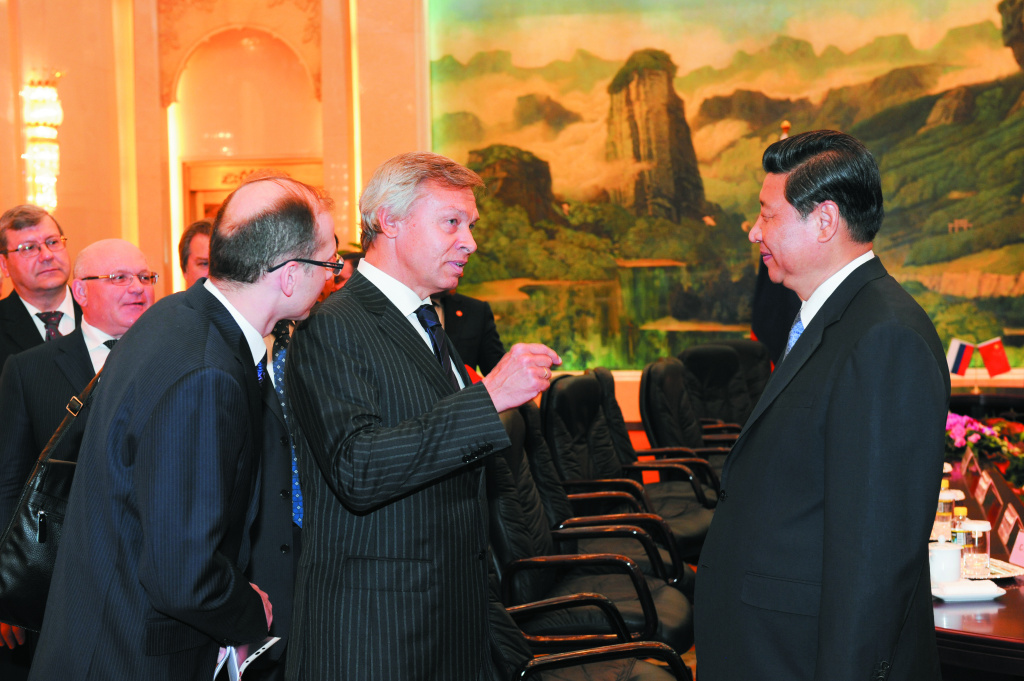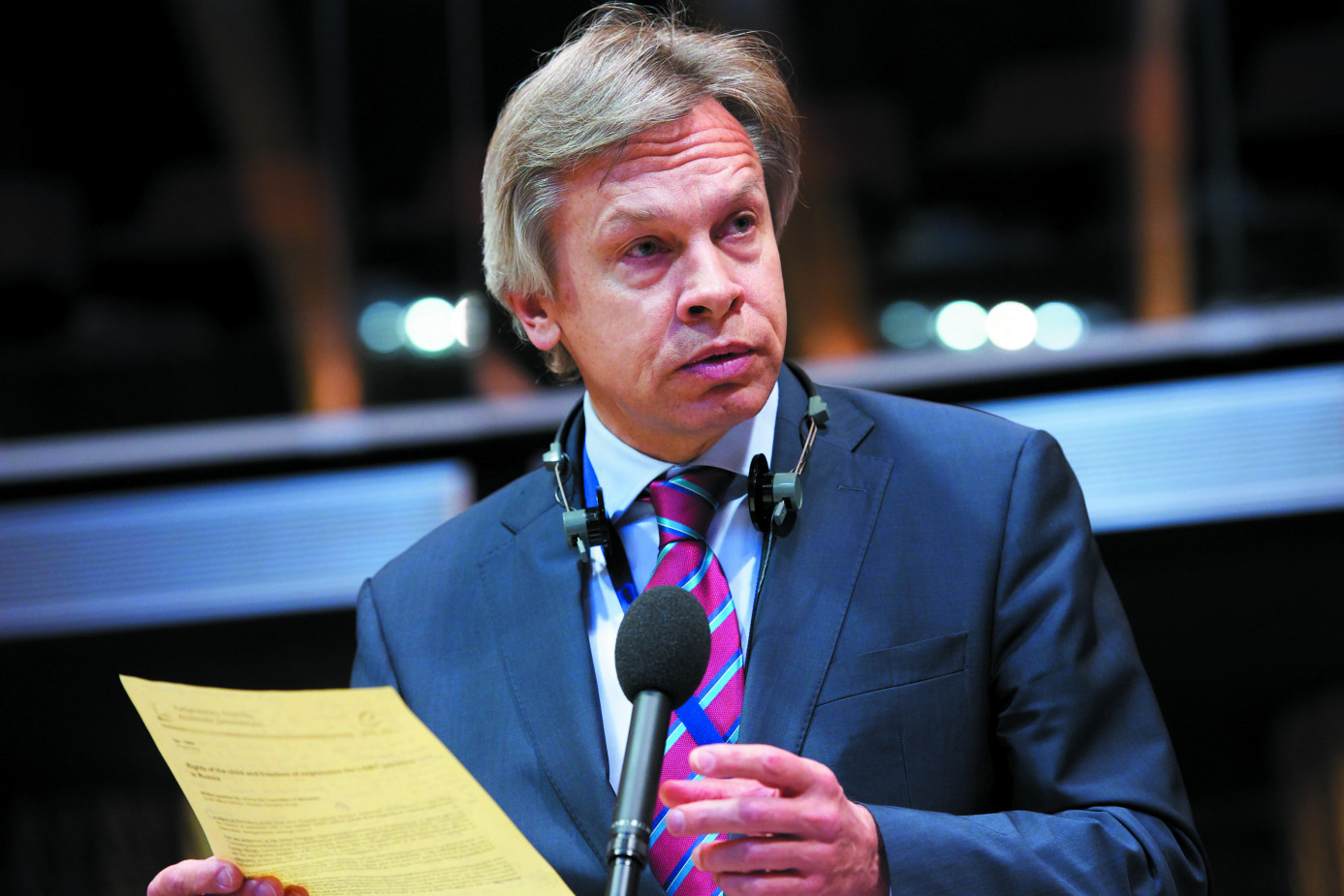
Strong and charismatic politicians who are a match for their foreign colleagues and can effectively uphold Russia’s interests and defend their views, are worth their weight in gold. One of them is Alexei Pushkov, who was born into the family of a Soviet diplomat and graduated fr om MGIMO University to become a leading foreign policy expert, chair of the State Duma Committee on International Affairs (2011-2016), head of the Russian Federal Assembly delegation in PACE, and the current chair of the Federation Council Commission on Information Policy and Cooperation with the Media.
During his conversation with The Crimean Magazine, Pushkov spoke about public diplomacy, the Western experts who reviewed the results of the 2014 referendum in Crimea, the reasons why the foreign media refuse to publish objective reports on the situation in Crimea, the water blockade, and the anti-Russia propaganda conducted by Western politicians and the neighbouring state.
Globes and planes
Question: Mr Pushkov, Moscow is regularly accused of persecuting certain groups of Crimean residents, primarily Crimean Tatars and Ukrainians, for their religion or work in human rights or journalism. The results of online surveys allegedly show that the human rights situation has been deteriorating since the “annexation” of Crimea. These surveys are held online because their compilers never bothered to visit the peninsula. What stops them fr om coming to Crimea to see for themselves that there is no substance behind all these allegations?
Alexei Pushkov: I have been to Crimea and have not seen any signs of persecution of anyone there. Moreover, unlike the Ukrainian period, now the republic has three official languages: Russian, Ukrainian and Crimean Tatar. The Crimean authorities are paying priority attention to the ethnic policy to prevent discrimination against any ethnic group. I believe that such allegations are part of the information campaign that is being waged against Russia as a whole and Crimea as its integral part. This campaign is being waged by those who have suffered major losses because of Crimea’s historic reunification with Russia, first of all the Crimean Tatar leadership of the anti-Russia émigrés in Europe, who deliver speeches at the European Parliament, submit complaints and pretend that there are indeed human rights violations in Crimea. In fact, their main goal is to continue attracting attention to this subject, because otherwise everybody would lose interest in it.
Question: There are also Western politicians, journalists and MPs who have a negative view of the peninsula even though they have never visited it. They claim that Russia is preventing international observer and expert missions from visiting Crimea.
Alexei Pushkov: In reality, there are no bans on visiting Crimea. Moreover, Gerard Stoudmann, Special Representative of the Council of Europe Secretary General, visited the peninsula in 2016. I met with him several times in Moscow and Strasbourg. He is a candid and experienced international official. He went to Crimea at the request of the Secretary General to prepare a report on the situation there, in which he outlined several concerns. However, he presented a much better picture compared to those created by Ukrainian representatives in the Council of Europe and PACE. And that is why his report was disregarded in the West and the Council of Europe. As for other visits, French MPs have been to Crimea several times and international observers, including from European countries, monitored elections at different levels there. They did not represent European authorities, but they are prominent public figures, politicians and experts. And none of them ever mentioned any tampering with the results, or any cases of discrimination or human rights violations.
By the way, in 2014 the leading Western pollsters – Gallup, Pew Research Centre and GfK – sent their experts to Crimea to check the results of the referendum. These experts concluded that the overwhelming majority of Crimeans indeed voted for reunification with Russia. The figures they provided were a bit lower than the official result, but they did reflect the will of the overwhelming majority of people in Crimea. After that, the subject of “falsified results” of the referendum was never mentioned in the Western media or by politicians, because it became clear to everyone that there were no figures or any other proof to back up this allegation. During my statements and PACE debates, I spoke time after time about the sentiments of the overwhelming majority of Crimeans, and I don’t remember anyone disputing that.
Question: Why do they continue to claim that it is impossible to visit Crimea?
Alexei Pushkov: There are different reasons. Do you recall that Laima Vaikule, a Soviet/Latvian singer, said that Europeans are prohibited from visiting Crimea? It is ot true. She did that simply because she feared she would be blacklisted and persecuted in Latvia. There is no ban on visiting Crimea. I can name many prominent European visitors to Crimea, from Thierry Mariani, a member of the European Parliament and former French minister in charge of transport, to former Prime Minister of Italy Silvio Berlusconi. And nobody stopped them either in Russia or in Europe. It is quite another matter that these visits annoyed and angered representatives of the liberal forces in Europe, who published articles lambasting these politicians, and the liberal media even compiled black lists. But there are no official bans. If any Western experts, deputies and politicians want to visit Crimea, they are free to come any time. And they will see that Crimea is a peaceful land, unlike Kiev, wh ere clashes take place near the Verkhovna Rada all the time, and wh ere far-right nationalists hold their torch marches and attack television companies’ offices.
Question: It is true that delegations fr om all over the world have visited the peninsula since 2014, and none of them reported negative impressions. In fact, Crimea has opted for public diplomacy, because official cooperation appears to be impossible. Have these efforts produced any results?
Alexei Pushkov: Efforts always produce a result, and any contacts are useful. Take the Yalta International Economic Forum, an important event demonstrating Crimea’s true image and opening it up to the world. However, I believe that the time factor is what matters most in this case. The international community is gradually coming to accept the fact that Crimea is part of Russia. This was obvious from the very beginning, although few people mentioned it openly in the West. But some did say this. I remember being in Paris in April 2014 to speak before the Foreign Affairs Committee of the French National Assembly. On the very first day I turned on the TV in my hotel room and saw an interview by a prominent French politician, who said: “Crimea? Crimea is Russian – everyone knows that.” That was Jean-Luc Melenchon, who won nearly 20 percent of the vote as the left forces’ presidential candidate in 2017. Incidentally, former President of France Valery Giscard d’Estaing once told me in a private conversation: “Look here, everyone knows it very well. Moreover, I can assure you that when Franklin Roosevelt and Winston Churchill went to the Yalta conference in 1945, they didn’t think they were going to Ukraine.” It was an ironic way of recognising the Russian status of Crimea. Former US President Jimmy Carter has said the same publicly on many occasions.
Question: Regrettably, this understanding has not had any influence on the official stand of Western countries.
Alexei Pushkov: No, they refuse to give an official recognition to this fact, for a number of reasons. However, time is working in our favour: more maps and globes showing Crimea as a part of Russia are being produced, and the documents of international airliners mention Crimea as part of Russia, based on facts. Of course, these events invariably cause a scandal in Kiev. Ukraine protests and writes angry letters, but what has this changed? I believe that time will put everything in its place.
No right to rights
Question: By the way, the Crimean Magazine also has a diplomatic mission. We run an English-language edition and distribute it abroad at various international venues and conferences, trying to explain in plain English what is actually going on in Crimea and what makes it tick. Is it worth it, or will no one hear us anyway, no matter how hard we try?
Alexei Pushkov: They will hear you, maybe not right away, and not everyone, but gradually it will happen. I think that explaining how people in Crimea feel, what they think, what they want and what they aspire to is essential. Two million people live in the Republic of Crimea, and they have the right to form their own opinion, and to choose the country wh ere they want to be citizens. By the same token, they have the right to be heard at international venues, and I have always defended this position. To give you an example, Kosovo representatives spoke many times at the Council of Europe and PACE, even though half of the planet has not recognised Kosovo as an independent state. People fr om Donbass, which is viewed as Ukrainian territory, have taken the floor at the UN Human Rights Council, despite the fact that Ukraine has essentially driven this region away. These people talked about the shelling that they had to endure, their wounds and the loss of loved ones. Of course, the West does not want to hear these facts. However, first, the world cannot be reduced to the West, and second, even in the West there are people who are ready to hear the truth about what is going on. Let me give you an example: over the past two or three years the West started to recognise the existence of neo-Nazi sentiment and movements in Ukraine, so better late than never. This goes to say that all outreach efforts designed to shift the conversation on Crimea from geopolitics to defending the interests and rights of people living on the Crimean Peninsula are worth it.
Question: Still, all these experts and human rights activists are in no hurry to recognise that people in Crimea have their own rights, and, by the way, it is not Russia that violates these rights on a regular basis, as the West is trying to portray the situation.
Alexei Pushkov: I remember being told by the Council of Europe that they cannot send a mission to Crimea because they do not recognise it as being part of Russia. In response, I said: “But you pretend that you fight for human rights! Two million people live in Crimea, so go there and find out whether their rights are respected. No one is asking you to grant or withhold recognition, just pay attention to how people live there.” But all you here in response is that absent recognition, they are not going there. It’s a vicious circle. This is wh ere people’s diplomacy comes in. When I hear that a representative of Crimea spoke at a UN conference, and Ukrainian delegates tried to prevent him from taking the floor, I don’t think this should scare anyone off. It is essential that people speak out to say we are here and we have rights. It is essential that the world knows that the people of Crimea are asserting their right to reside in Russia. Even if Europe and the United States officially pretend that this topic is irrelevant, your presence at international venues and your publicity efforts prove that you have the right to be heard, that you, the people of Crimea, have the right to assert your position and make it known to the international community. I am certain that these efforts will gradually yield results, and in fact this is already happening.
Question: Incidentally, Editor-in-Chief of The Crimean Magazine Maria Volkonskaya is one of the representatives of Crimea who speak at international venues, including the OSCE. She is well aware that Europe ignores the views of Crimeans. It is difficult to be heard but this is not the only problem. It is often impossible for residents of the peninsula to travel to Europe. We are not allowed to come, we are denied visas, and there are obstacles to the work of journalists…
Alexei Pushkov: This is deliberate discrimination against Crimeans. Europe wants to demonstrate its disapproval of their choice. I would even call it a certain form of punishment and pressure at the same time. I consider these actions illegal. They violate the principle of defending human rights and the right to freedom of movement. By denying Crimeans access to its territory, the European Union is violating its own principles and international commitments. People should not suffer because of political disputes and be denied the right to move freely, to visit relatives and friends, or simply for tourism. I hope this policy will change sooner or later.
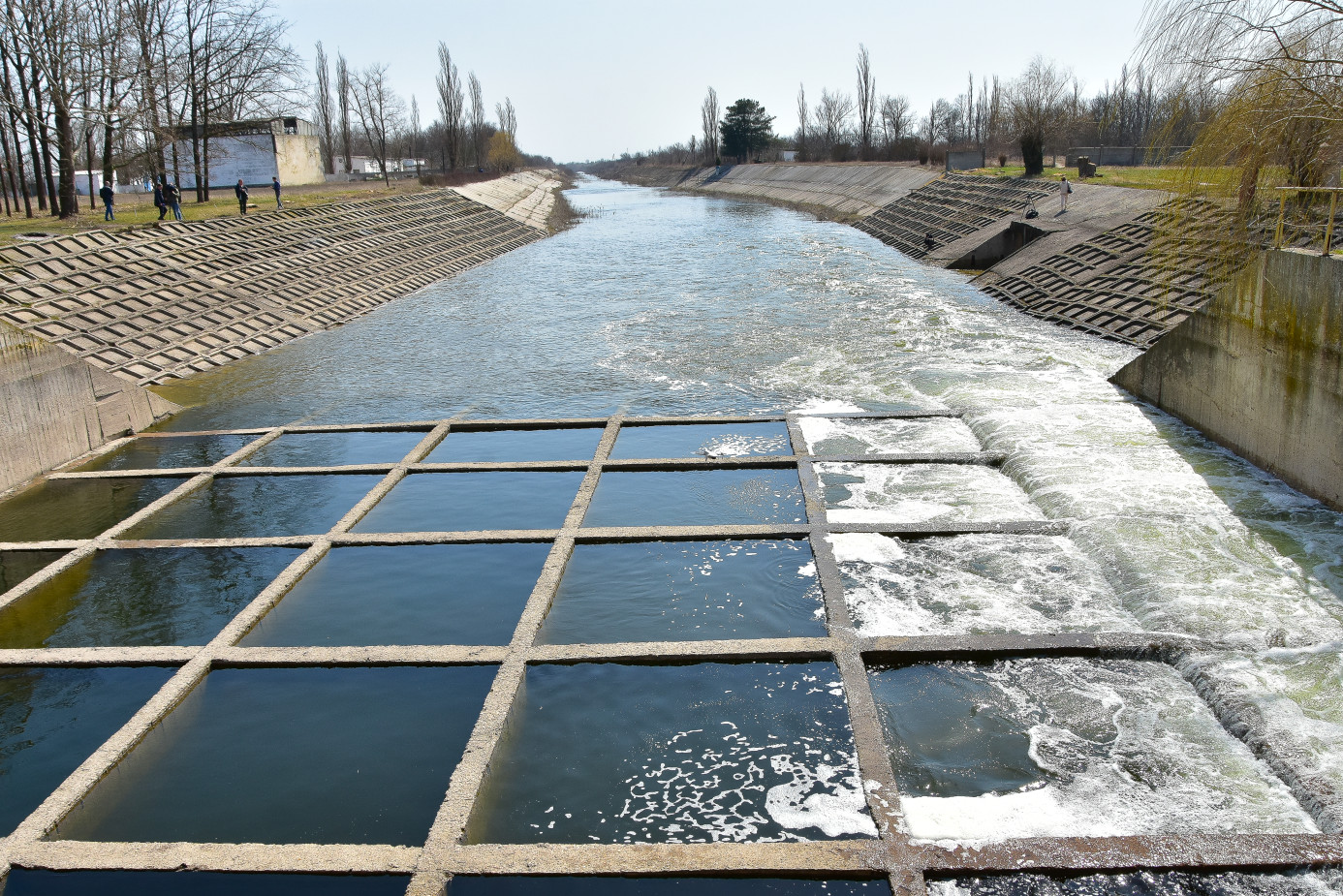
Question: As for the violation of rights, people in Crimea are suffering from acute water shortages and are very irritated by Kiev’s statements that this is exclusively the problem of “the occupiers.” We will resolve this problem, of course, but why do international organisations choose not to react to this glaring violation of the fundamental right of Crimeans?
Alexei Pushkov: I think international organisations are silent because they long ago made their choice in favour of geopolitics rather than human rights and the supremacy of law. This applies to PACE and the OSCE Parliamentary Assembly. I worked in both and know them well. In 2014, the majority of Western delegates in both assemblies supported the coup d’etat in Kiev and sided with the new Ukrainian authorities, regardless of what they were. A scandalous incident took place in PACE. When we suggested denouncing Ukraine’s ultra-nationalist xenophobic and neo-Nazi parties, proceeding from a similar resolution of the European Parliament dating back to 2011, only 50 delegates out of more than 200 people present in the hall, supported it. All others refused to condemn neo-Nazis! Later on, those few delegates who supported our resolution, approached me as the head of the delegation and admitted that they were ashamed of their colleagues. It made sense because this vote was a betrayal of the principles supposedly inscribed on the banners of the Council of Europe – supremacy of law, democratic standards and human rights. Cynical geopolitics prevailed: it does not matter what is happening in Ukraine, it must be supported because it is against Russia. This policy eventually led to the imposition of sanctions against our delegation in PACE. We decided to quit in protest. We did not take part in its work for five years before the sanctions were lifted and we were invited to return without any terms and restrictions.
Question: Are you saying that it is not worth appealing to international institutions with such problems?
Alexei Pushkov: It is possible to raise such problems. Our delegations should speak about Crimea’s water supply at international venues and emphasise that people have the right to freely access water. But we must bear in mind that Western states will support the water blockade without admitting it in public. They simply hope that this problem will affect the attitude of the Crimeans and worsen the situation on the peninsula. They automatically support Ukraine no matter what it does. When Ukrainian nationalists burned people in Odessa, we were told that the fire started by itself. This was their reaction. We cannot rely on the support of international structures. We must speak about problems and resolve them ourselves. I have already told you about Mr Studman’s report in which he criticised Ukraine’s water blockade of Crimea and the denial of visas to Crimeans by Western countries. This is why officials in the Council of Europe and Western capitals pretended not to notice this report. It speaks volumes.
Dangerous games
Question: Ukraine has recently become a venue for openly hostile Western actions against Russia. It is enough to recall a training missile strike by US B-52 strategic bombers on Crimea from Ukrainian air space. What is the goal of these exercises?
Alexei Pushkov: The goal is clear: to intimidate and show that the Crimean issue has not been closed for Ukraine and, frankly speaking, its military allies in the West. They are also trying to scare Russia: bear in mind that we can use Ukrainian territory against you militarily as well. I believe if Mr Biden becomes president, and this is most likely, the US will toughen this policy.
Question: So, it’s like flexing muscles, right?
Alexei Pushkov: Yes, this is a muscle flex, which has always been a part of world politics. When we send our strategic bombers to the North Atlantic on training flights, the West sees it as flexing muscles as well. It’s like an established game. But there is a difference. America’s games in Ukraine take place in the direct vicinity of Russia’s borders and amount to an aggressive demonstration, as distinct from our flights that follow well-known routes and are not a provocation. Meanwhile, the recent US exercise with strategic bombers are definitely an ostentatious provocation against Russia.